Guides
Pest Control Off-Season Revenue Ideas That Keep Technicians Busy
Pest control off-season revenue ideas keep northern techs busy with rodent exclusion, insulation, and crawl space work. Plan by interval for winter profit.
What to take away
- Off-season revenue in northern US pest control comes from rodent exclusion, insulation services, crawl space encapsulation, and commercial monitoring, not from discounting general pest work.
- Schedule work by interval: first month of cold, each season, once a year, every few years, and urgent signs.
- Rodent exclusion services are the fastest winter add-on because entry points fail first and customers see droppings before noticing gaps.
- A symptom-to-cause table keeps technicians from treating the wrong problem on a slow route.
- Annual wall and attic inspections preserve technician hours without requiring new equipment purchases.
After the first month
When cold weather settles in, pest control off-season revenue ideas should shift from broad pest calls to structural fixes. Run a quick audit of every route stop that had rodent activity in the prior three months. Schedule follow-up visits for those accounts using the pest control team training checklist so technicians can explain exclusion work before they start it. In the first month, you are not installing new programs; you are resetting the accounts that already need attention.
- Pull October and November rodent call logs.
- Assign the same technician for follow-up.
- Confirm all open entry points from the last service note.
- Record the condition of traps and bait stations.
- Leave a one-page winter service plan with the property manager.
Each season
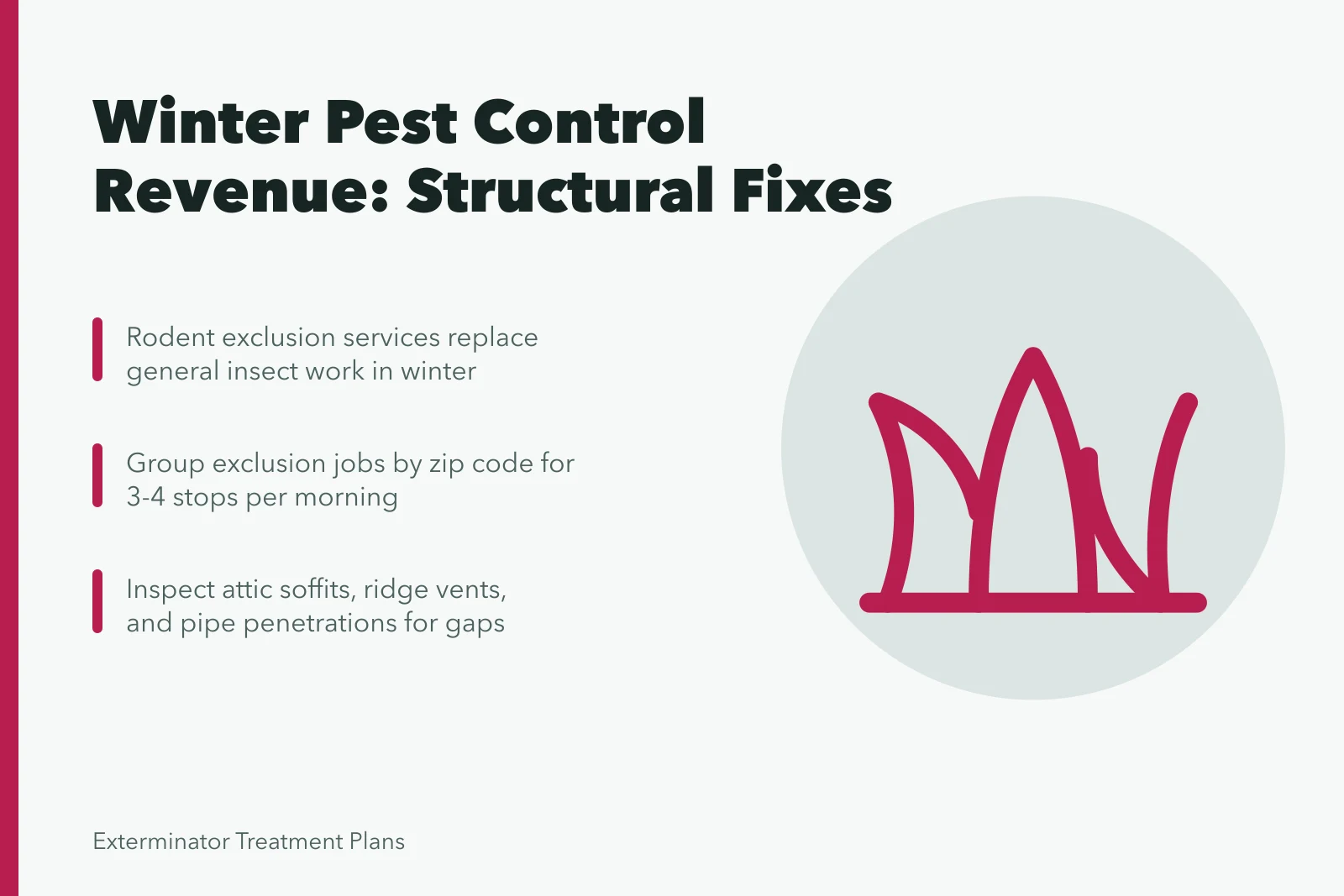
Each season brings a different demand pattern. In winter, rodent exclusion services replace general insect work in northern states. Use Pest Control Route Density to group these jobs by zip code so a technician can complete three or four exclusion stops in one morning. Add crawl space encapsulation and attic insulation checks as separate line items, not as free extras. Pest control seasonal revenue dips hardest in January and February, so each season should carry one recurring service line.
Set a monthly reminder to review trap counts from commercial accounts. A restaurant that reports mice in December is a hotter lead than a discounted summer quarterly.
Winter slowdowns shrink revenue when a truck rolls fewer stops. The fix is not deeper discounting. It is adding services that customers already request in cold months, such as rodent sealing and moisture control.
The general business pattern from off-season applies here: keep the same labor force busy with services customers still need.
Once a year
Once a year, inspect every property on your maintenance list for winter-specific deficiencies. Follow this sequence:
- Check attic soffits, ridge vents, and pipe penetrations for gaps.
- Inspect crawl space vapor barriers for tears and pooled moisture.
- Document rodent rub marks and droppings near entry points.
- Update the customer's exclusion map and schedule any repairs for the same quarter.
- Ask each technician to practice the simple pest control business owners referral script before winter appointments.
This annual review keeps winter pest control services profitable because the finding is already documented before the customer sees a new problem.
Every few years
Every few years, renegotiate annual contracts for commercial accounts that close for the season or reduce staff. Food processing plants, warehouses, and apartment buildings often need stored product pest monitoring and rodent exclusion reviews during winter shutdowns. Compare your notes with the New York City multifamily buildings compliance guidance before renewing a large contract.
Signs it needs attention now
A sudden cold snap can reveal problems that were hidden behind summer insect calls. The first thing that fails from neglect is the seal around pipe penetrations and door sweeps, so gaps reopen before you notice droppings. Use this symptom table to direct technicians before they waste time on a slow route.
| Symptom | Likely cause | First action |
|---|---|---|
| Droppings in pantry or utility room | Gap behind a pipe chase or baseboard | Inspect and seal the entry point |
| Scratching in walls at night | Rodents entering through a roofline gap | Check attic soffit and vent screens |
| Cold draft near an exterior door | Worn door sweep or threshold | Replace the sweep and check for grease marks |
| Musty crawl space smell | Vapor barrier tear or downspout discharge | Pull back insulation, dry the area, and patch the barrier |
For exclusion safety, follow the EPA safe pest control practices when sealing entry points and placing traps.
Common questions
Do I need a separate license for winter rodent exclusion services? No. In most states, rodent control falls under the existing pest control license, but check your state board for structural pest control categories. How do I pay technicians when January and February have fewer stops? Keep a base hourly floor plus a small completion bonus for exclusion jobs. Use route density to shrink drive time so a slower week still produces billable hours. What if a customer asks for insulation replacement after rodent damage? Only offer the pest control portion. Refer the insulation work to a licensed insulation contractor, and document the handoff so you do not take on work outside your pest control scope. When should I stop scheduling off-season add-on services? Stop when spring insect calls return, usually after the first sustained thaw in your region. Keep a short list of winter accounts for next year's first cold snap.