Guides
Pest control team training checklist owners reuse
A useful answer to 'pest control staff training' starts with the work the team must deliver reliably, not with a borrowed benchmark. This guide treats the topic as.
What to take away
- A useful answer to "pest control staff training" starts with the work the team must deliver reliably, not with a borrowed benchmark.
- This guide treats the topic as a series of decisions that can be documented, assigned, measured, and revised.
- The useful outcome of "Pest control employee training checklist" is not a longer policy.
- It is a team that can explain the decision, follow the workflow, find the evidence, and see when a review is due.
This article provides general pest-control business information, not individualized pest identification, pesticide selection, label interpretation, application, certification, environmental, wildlife, building, food-facility, employment, tax, insurance, contract, or legal advice. Requirements depend on the jurisdiction, pest, site, product label, application category, customer, worker status, and treatment plan, so confirm current duties with pesticide authorities and qualified pest-management professionals.
A useful answer to "pest control staff training" starts with the work the team must deliver reliably, not with a borrowed benchmark. This guide treats the topic as a series of decisions that can be documented, assigned, measured, and revised. It focuses on business systems and does not replace professional advice for regulated, technical, safety, or professional decisions.
Practical checklist
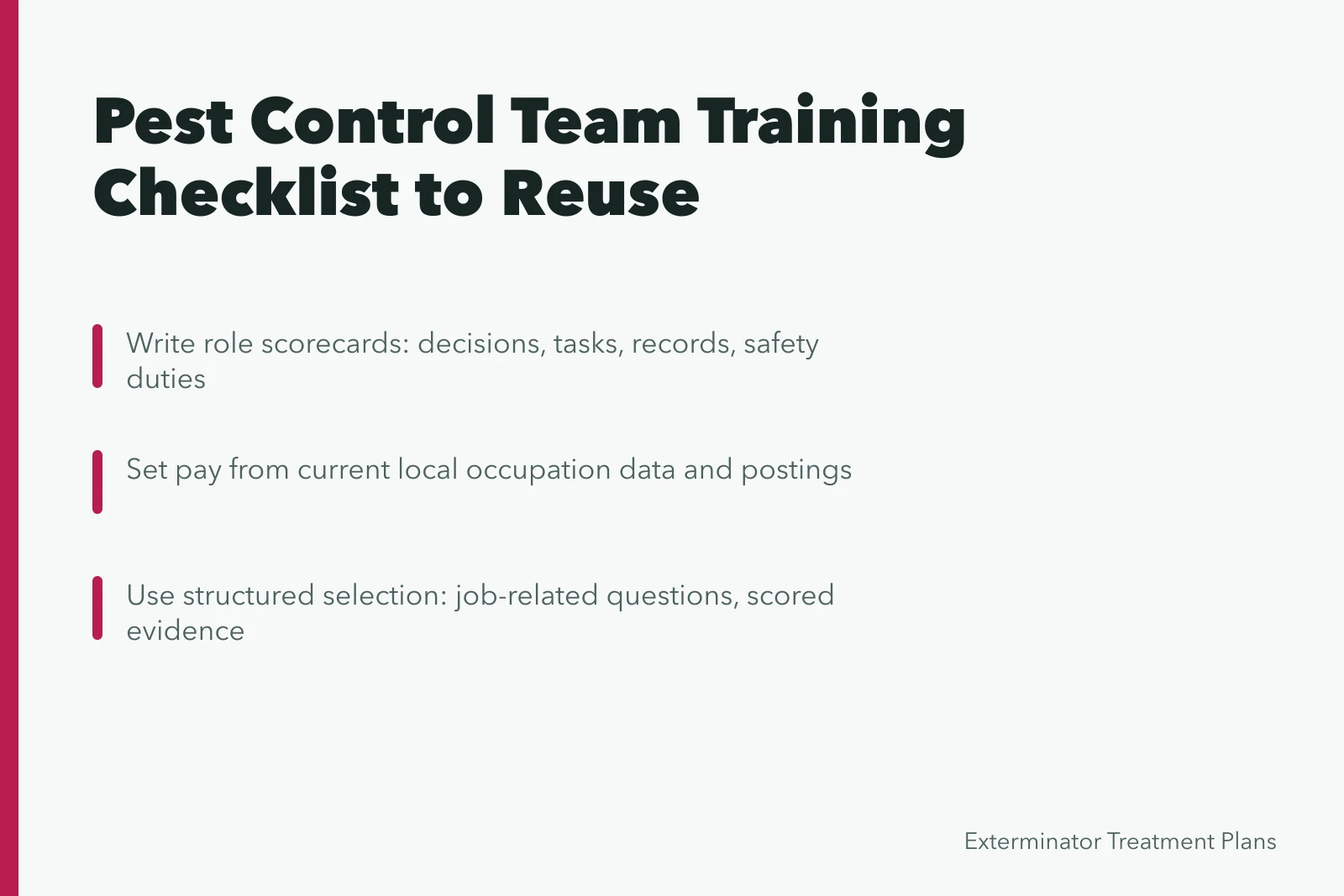
- Write role scorecards: Define decisions, tasks, customer contact, records, equipment, safety duties, schedule, physical conditions, escalation, and first-six-month outcomes for each role.
- Set pay from current local evidence: Use current occupation data, local postings, verified skill, credentials, schedule, travel, responsibility, benefits, and internal equity as inputs.
- Use structured selection: Ask comparable job-related questions, score evidence, verify material credentials and references lawfully, and document the decision.
- Give a realistic work preview: Explain schedule, travel, pace, physical conditions, customer conflict, paperwork, routine tasks, hazards, and variable demand honestly.
- Stage onboarding by risk and frequency: Sequence policies, customer work, systems, safety, equipment, service standards, records, shadowing, observed practice, and sign-off before independence.
- Control authorization: Maintain a current record of who may perform regulated, hazardous, financial, privacy-sensitive, driving, equipment, or customer-approval tasks.
- Build humane schedules: Plan demand, travel, setup, breaks, fatigue, recovery, training, absences, overtime, peak seasons, and personal availability within applicable rules.
- Coach from evidence: Use observed work, records, quality checks, customer communication, incidents, teamwork, and agreed outcomes for specific feedback and review dates. Use this material as a decision aid for pest control staff training, not as a universal ranking or compliance shortcut. Confirm the local rule, the actual workflow, the full cost, and the person responsible before changing the business.
What to verify before acting
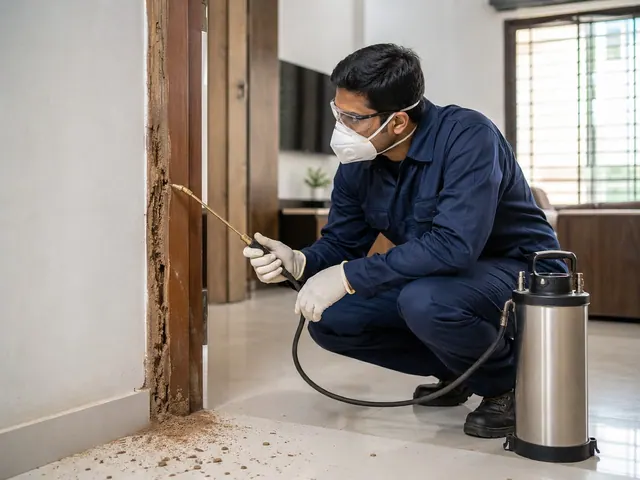
For pest control staff training, U.S. Bureau of Labor Statistics: Pest Control Workers supplies a checkable research point. BLS describes pest inspection, identification, estimating, treatment, prevention, driving, pesticide risk, protective gear, on-the-job training, and state licensing as central features of pest-control work.
For pest control staff training, U.S. Department of Labor: New and Small Businesses supplies a checkable research point. New employers must understand applicable wage, overtime, timekeeping, child labor, leave, notice, and recordkeeping duties under federal and state law.
For pest control staff training, U.S. Equal Employment Opportunity Commission: Small Business Resource Center supplies a checkable research point. The EEOC provides small employers with guidance on nondiscrimination, accommodations, employment records, workplace notices, and fair employment decisions.
Document control matters for pest control staff training. Put an effective date on the working standard, identify the approved version, and keep superseded copies out of daily use. Staff should know where to find the current process and how to report a conflict between the written rule and real work. In this article, apply the note specifically to "Pest control employee training checklist" rather than as a generic management exercise.
Parting checks
The useful outcome of "Pest control employee training checklist" is not a longer policy. It is a team that can explain the decision, follow the workflow, find the evidence, and see when a review is due.
Common questions
What goes wrong with practical checklist?
Use this material as a decision aid for pest control staff training, not as a universal ranking or compliance shortcut. Confirm the local rule, the actual workflow, the full cost, and the person responsible before changing the business.
What should this not be used for?
It focuses on business systems and does not replace professional advice for regulated, technical, safety, or professional decisions. Use this material as a decision aid for pest control staff training, not as a universal ranking or compliance shortcut.
What has to be confirmed locally?
Confirm the local rule, the actual workflow, the full cost, and the person responsible before changing the business.