Guides
Pest Control Service Agreement Cancellation Policy: What Owners Can Charge
Pest control service agreement cancellation policy terms face state consumer protection rules, cooling-off periods and permit law. Here is what owners may charge.
What to take away
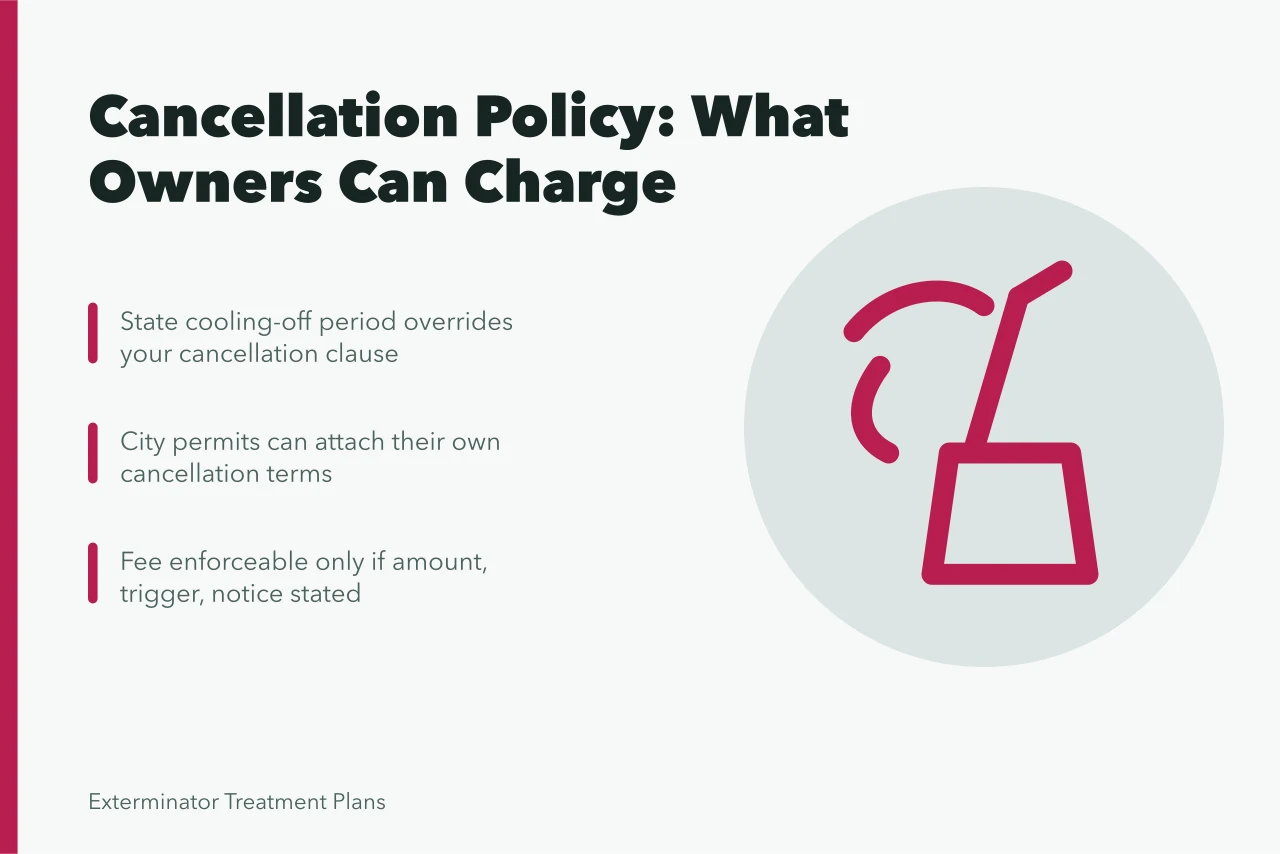
- A cooling-off period created by state law overrides the cancellation clause you wrote, so a homeowner who cancels inside that window owes nothing under the contract.
- Jurisdiction over cancellation terms sits in three layers: your state licensing board, your city or county consumer protection office, and private rules such as franchise agreements and insurer requirements.
- A cancellation fee is enforceable only where the contract states the amount, the trigger and the notice method, and where state law allows that fee at all.
- Skipping the required disclosures does not just void the fee. It can void the entire agreement and expose the business to a state enforcement action.
Who has jurisdiction over the clause
Three layers decide whether your cancellation language survives a complaint. The state layer is the strongest. Most states give their pesticide regulatory agency or attorney general authority over unfair or deceptive service contracts, and several set a minimum cancellation right by statute.
The municipal layer matters more than owners expect. Cities and counties that require a local operating permit often attach contract terms to that permit, including a right to cancel within a set number of days.
The private layer is contractual rather than legal. If you operate under a franchise, the franchisor's standards may limit what you can charge. Insurers may also require specific cancellation language before they cover a claim. The FTC Franchise Rule compliance guide explains the disclosure duties that sit on top of franchise standards.
What triggers a permit or filing
Not every contract needs a filing. The trigger is usually one of these:
- You sell a renewable service plan that bills automatically for twelve months or longer.
- You require a cancellation fee or a minimum term as a condition of service.
- You operate in a state that treats pest control as a regulated home service contract.
- You take a deposit or prepayment for work scheduled more than a few weeks out.
Where any of those apply, check the state statute before you print the form. The SBA launch guide walks through the general licensing steps that sit alongside a pesticide applicator license.
What to submit with an application
State boards and local consumer offices ask for a predictable packet. Missing one item is the most common reason a filing stalls.
- The full contract text, including the cancellation clause and any fee schedule
- Your pesticide applicator license number and business registration
- Proof of insurance, with the certificate naming the required parties
- A sample notice of cancellation, if the state prescribes one
- The name and contact details of the person who handles cancellations
Keep a dated copy of everything you send. If a complaint arrives two years later, that copy is your defence.
How long approval takes
Timelines vary by state and by whether the filing is a registration or a review. A registration is often processed in a few weeks. A review of contract language can run considerably longer, and some states do not publish a fixed period at all.
Plan the launch around the slower number. Owners who print a year of contract forms before approval sometimes find the state requires different wording, and the reprint is on them. Compare how boards differ in state pest control licensing requirements before you commit to a form.
What happens if you skip it
Concrete consequence: a cancellation fee collected under a non-compliant contract is refundable, and in several states the homeowner can recover that money plus statutory damages and attorney fees.
The damage does not stop at one refund. A state enforcement action can suspend the license that lets you treat at all, which halts every route in the book. Local permits can be pulled on the same facts.
A contract that cannot be enforced in front of a regulator is not a contract. It is a liability with your logo on it.
Owners who treat the clause as a formality tend to discover the problem through a chargeback rather than a letter. Card networks apply their own dispute rules on top of state law, and a pattern of disputes can end your merchant account. Review how cancellations feed into service records in measuring service quality.
Example: a clause that failed review
A two-year plan in a state with a three-day right of cancellation required sixty days written notice and charged a termination fee. The state consumer office treated the sixty-day notice as an unreasonable barrier and the fee as unearned.
The fix was structural, not cosmetic. The owner shortened the notice period, tied the fee to documented visits already performed, and added a plain-language cancellation notice. Renewals then had to be re-papered under the corrected form.
Common questions
Can I charge a cancellation fee at all? Yes, where state law permits it and the contract states the amount and trigger clearly. The fee must reflect work already done or costs actually incurred, not a penalty for leaving.
Does a cooling-off period apply to a signed contract? In states that create one, yes. The right exists because the law grants it, and a signature does not waive it. Check your state statute and any local permit condition.
What if the customer cancels after service started? You can generally bill for completed visits and any materials used. Anything beyond that depends on the fee language and on what your state allows.
Do franchise rules change my cancellation terms? They can. A franchisor may require specific wording or a minimum notice period, and those terms sit on top of state law rather than replacing it.